

As an institution or program leader, you likely know the feeling of a looming accreditation deadline—a mix of anxiety and the suspicion that you are about to spend countless hours on bureaucratic “box-checking”. Across many campuses, accreditation has often devolved into a voluminous documentation exercise that drains resources without driving genuine quality improvement.
The secret to breaking this cycle is simple but requires a shift in mindset: accreditation is an ongoing process of organizational learning, not a series of never-ending meetings triggered by a due date. By building small habits of evidence collection into your daily operations, you can ensure your team is always “reviewer-ready” and you will also find yourself making progress toward bigger goals along the way simply because you are paying attention to the standards over time.
Understanding the Reviewer’s Lens: Value over Volume
Accreditation reviewers are volunteers, often your peers, with limited time to fully grasp the breadth of your program’s efforts to produce qualified graduates. Therefore, your main goal is to simplify their work by providing clear, persuasive evidence. This evidence must be authentic, gathered organically over several years, rather than documentation hastily created to satisfy a standard at the last hour.
One of the most frequent errors in accreditation is relying on Proof of Activity—documentation that only shows what an institution does (e.g., “we have a committee”, “here is our policy”). This can bore or annoy your accreditation reviewers and doesn’t support the full richness of your work with and for students. You might need to introduce the basics, but don’t stop here.
To build true confidence, your evidence must move toward Proof of Impact, answering the critical question: What has changed or been improved as a result of our activity? (e.g. “our committee made this decision and this is how we know it solved a problem”, “this is an example of the new policy being used to reduce a barrier for a student”).
The A-C-E Framework for Future Evidence
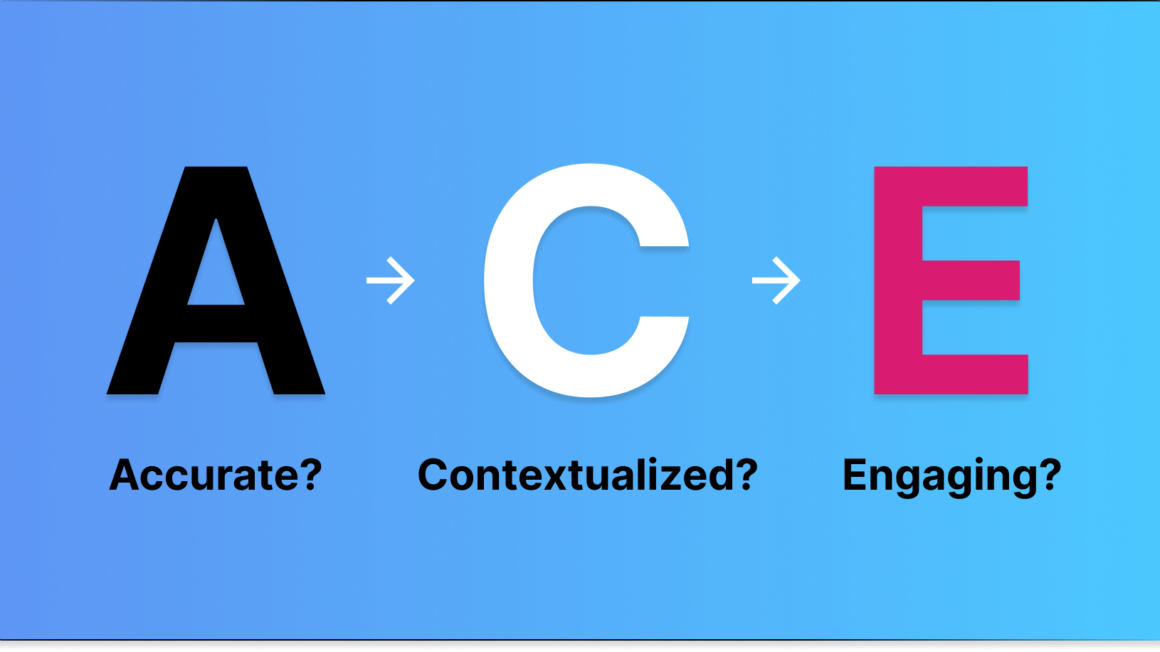
To ensure the artifacts you collect today will be useful three years from now, subject every potential piece of evidence to the A-C-E check:
- Accurate: Is this the final, approved version? Is it dated?
- Contextualized: Does the file need a description? You should never include “mystery evidence” or documents that are long.
- Engaging: Does it tell a story? Reviewers are people learning your story from you, think of the evidence documents as a way to illustrate your story and make it more compelling.
Organizing for the Unfamiliar Accreditation Site Visitor
To tip the scales in your favor, establish these structural habits now:
- Standardize Naming Conventions: Disorganized file names like “Minutes.docx” suggest a sloppy approach. Adopt clear titles such as Assessment_Committee_Minutes_09_2024.pdf.
- Use Static Formats: Convert everything to PDF. This prevents accidental edits and ensures the version the reviewer sees is exactly what you intended. Don’t skip this step.
- Redact Early: Accreditation is a review of institutions and programs, not individuals. Develop a habit of redacting personally identifiable information (PII)—like student IDs or specific salaries—before files are archived in your selected evidence repository.
- Create Focused Files: No reviewer is going to read through your catalog to figure out why it was important to this standard. Isolate the page(s) that are relevant for your reviewer in this standard or criteria and highlight the exact section of important information.
- Summarize: Contextual information is key – point out in the narrative and in the file title and in a file description give brief clues to what is contained in the file.
Creating a Sustainable Documentation Cycle
You shouldn’t wait for a site visit schedule to look at your files. Aim for annual or semi-annual reviews of your evidence. This “regular gap analysis” allows you to identify standards that are currently “at-risk” because they lack clear support. It also allows you to follow up to collect missing artifacts while they are still current and readily available from committees, faculty, and IR offices.
When you identify a gap early, you have the time to naturally generate the necessary documentation through your normal work, rather than trying to manufacture a story right before submission.
Remember, the goal is to provide your best accreditation evidence, not your most evidence. By focusing on high-quality, impactful artifacts throughout the year, you can transform accreditation from a burden into a powerful catalyst for institutional and programmatic excellence.